

I was born in Switzerland in 1965, in Lausanne, into a family where several languages coexisted naturally. From an early age, I understood that no language fully encompasses reality. Each illuminates a part of the world while leaving a zone of shadow.
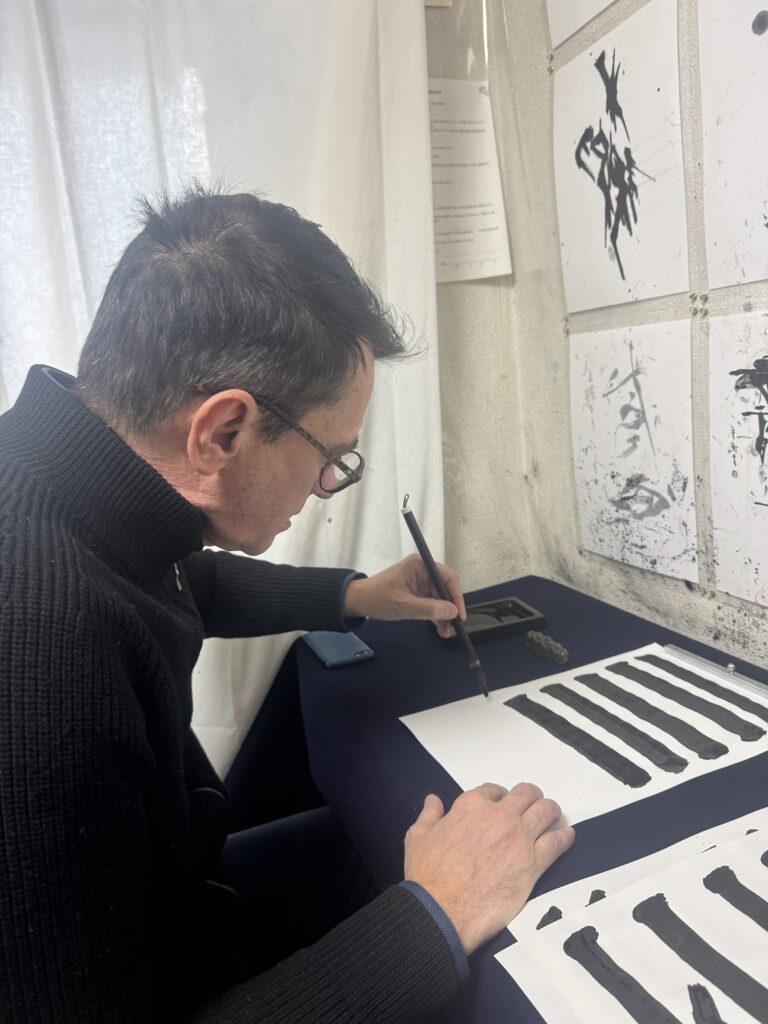
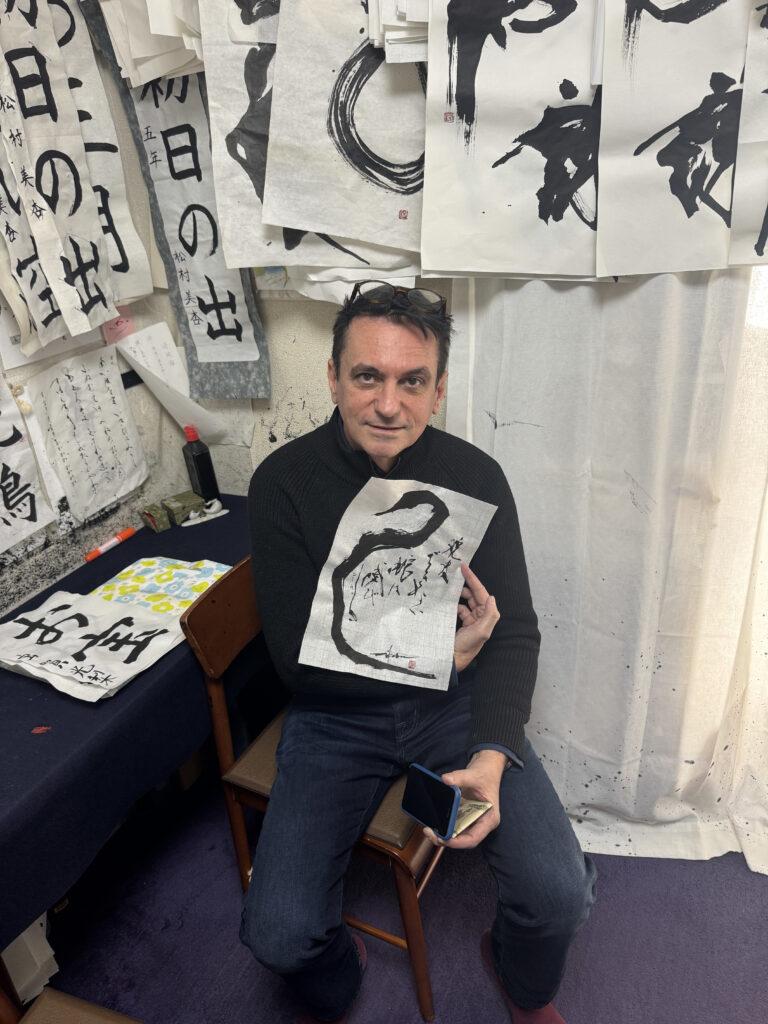
I am left-handed. Like many of my generation, however, I learned to write with my right hand. Today, I paint with my left hand. This is not a return to a lost identity, but the rediscovered sensation of a truer gesture, a freer breath.
My studies in political science and sociology in Lausanne and then in Montreal, before an executive Master’s degree, responded to the same curiosity: understanding how societies organize themselves, how decisions take shape, and why institutions resist or transform. Later, journalism, followed by responsibilities in public and parapublic organizations, confronted me daily with this necessity to name, to order, and to decide.
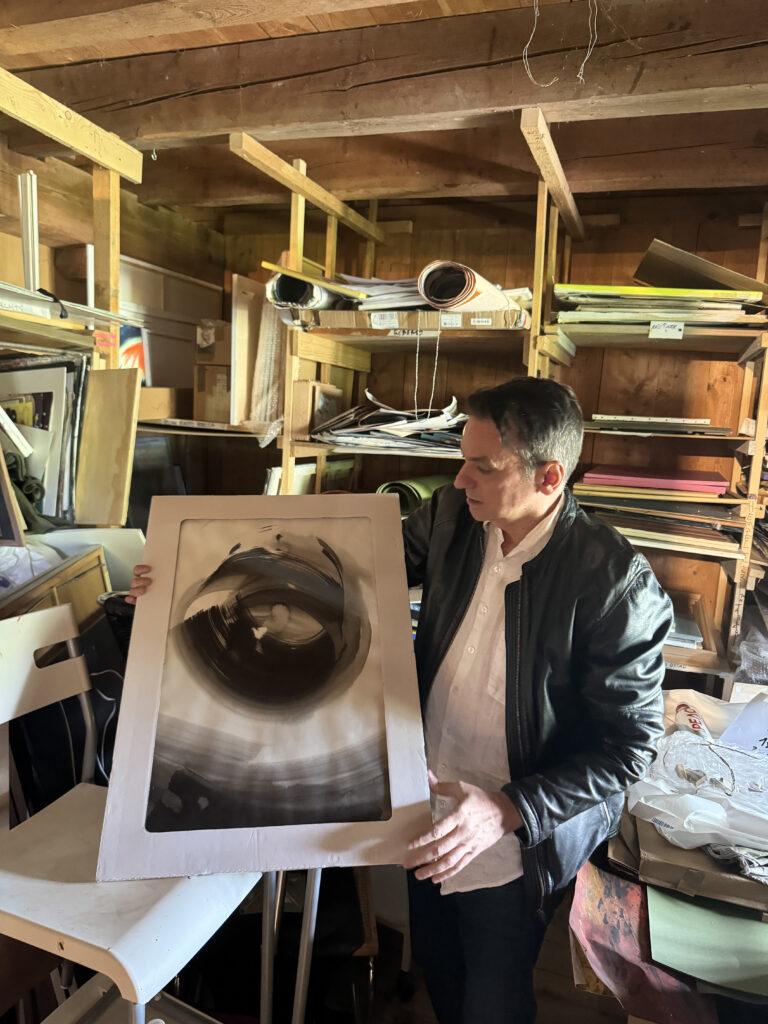
The studio obeys an inverse logic. Nothing there requires demonstration. A line may suffice. A color that refuses to meet another. A material that offers resistance and compels a change of direction. Here, uncertainty becomes the very condition of the work.
Photography sharpened my attention to framing, surfaces, and contrasts. Cinema taught me that rhythm and interruption shape perception. Before the canvas, these experiences cease to be knowledge: they become a silent memory of gesture.
About
Roberto
Induni
About Roberto Induni
I was born in Switzerland in 1965, in Lausanne, into a family where several languages coexisted naturally. From an early age, I understood that no language fully encompasses reality. Each illuminates a part of the world while leaving a zone of shadow.
I am left-handed. Like many of my generation, however, I learned to write with my right hand. Today, I paint with my left hand. This is not a return to a lost identity, but the rediscovered sensation of a truer gesture, a freer breath.
My studies in political science and sociology in Lausanne and then in Montreal, before an executive Master’s degree, responded to the same curiosity: understanding how societies organize themselves, how decisions take shape, and why institutions resist or transform. Later, journalism, followed by responsibilities in public and parapublic organizations, confronted me daily with this necessity to name, to order, and to decide.
The studio obeys an inverse logic. Nothing there requires demonstration. A line may suffice. A color that refuses to meet another. A material that offers resistance and compels a change of direction. Here, uncertainty becomes the very condition of the work.
Photography sharpened my attention to framing, surfaces, and contrasts. Cinema taught me that rhythm and interruption shape perception. Before the canvas, these experiences cease to be knowledge: they become a silent memory of gesture.
About
Roberto
Induni
I was born in Switzerland in 1965, in Lausanne, into a family where several languages coexisted naturally. From an early age, I understood that no language fully encompasses reality. Each illuminates a part of the world while leaving a zone of shadow.
I am left-handed. Like many of my generation, however, I learned to write with my right hand. Today, I paint with my left hand. This is not a return to a lost identity, but the rediscovered sensation of a truer gesture, a freer breath.
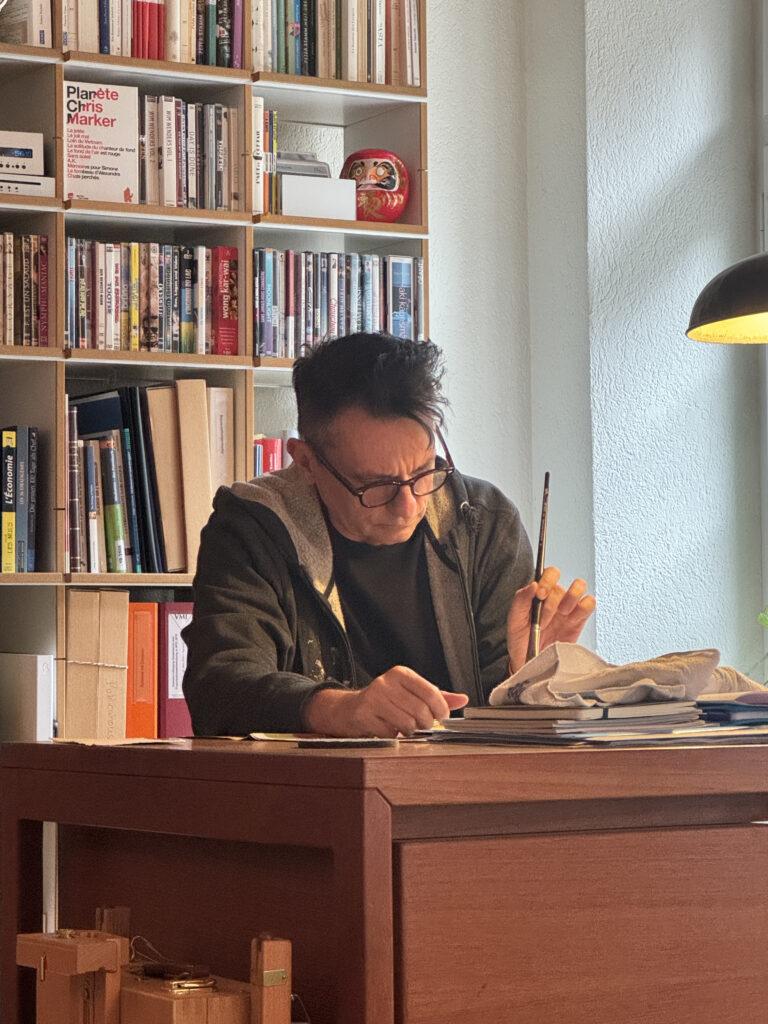
My studies in political science and sociology in Lausanne and then in Montreal, before an executive Master’s degree, responded to the same curiosity: understanding how societies organize themselves, how decisions take shape, and why institutions resist or transform. Later, journalism, followed by responsibilities in public and parapublic organizations, confronted me daily with this necessity to name, to order, and to decide.
The studio obeys an inverse logic. Nothing there requires demonstration. A line may suffice. A color that refuses to meet another. A material that offers resistance and compels a change of direction. Here, uncertainty becomes the very condition of the work.
Photography sharpened my attention to framing, surfaces, and contrasts. Cinema taught me that rhythm and interruption shape perception. Before the canvas, these experiences cease to be knowledge: they become a silent memory of gesture.
Roberto Induni