

Artistic Approach
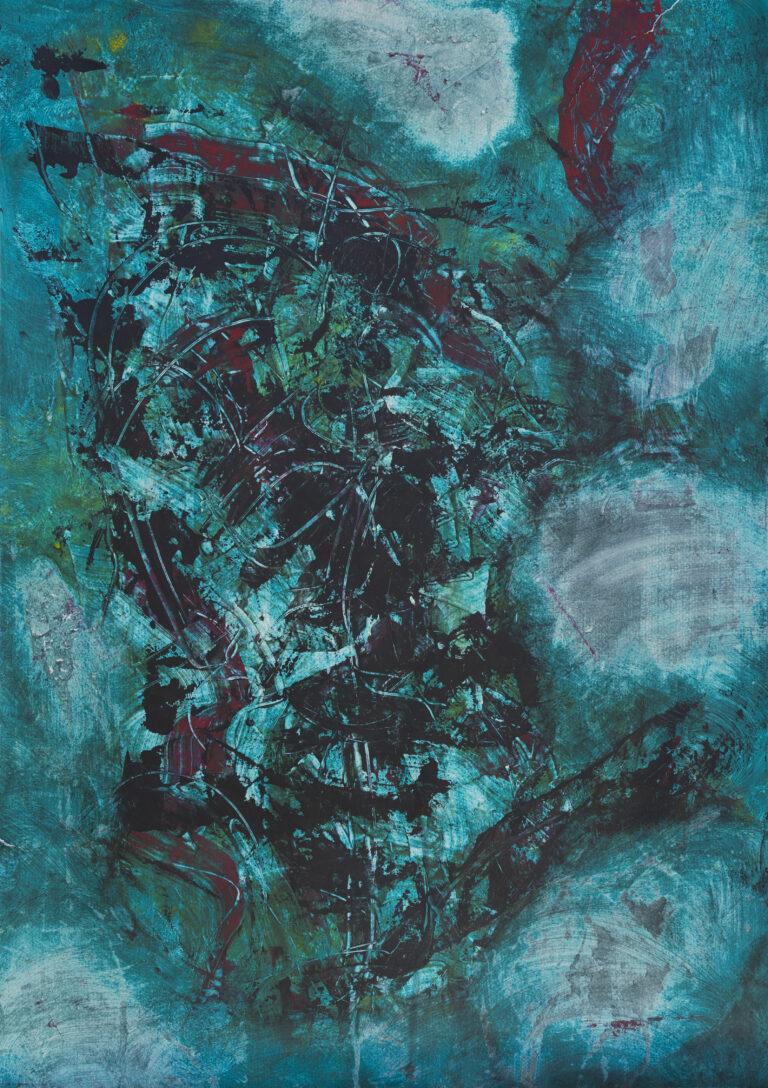
Before being an image, a painting is an act. It does not proceed from a vision that one need only transcribe with more or less skill, but from a commitment in which the hand accepts not knowing what it will encounter. For Roberto Induni, the painting never confirms a previously conceived idea. It begins where all certainty consents to fade away.
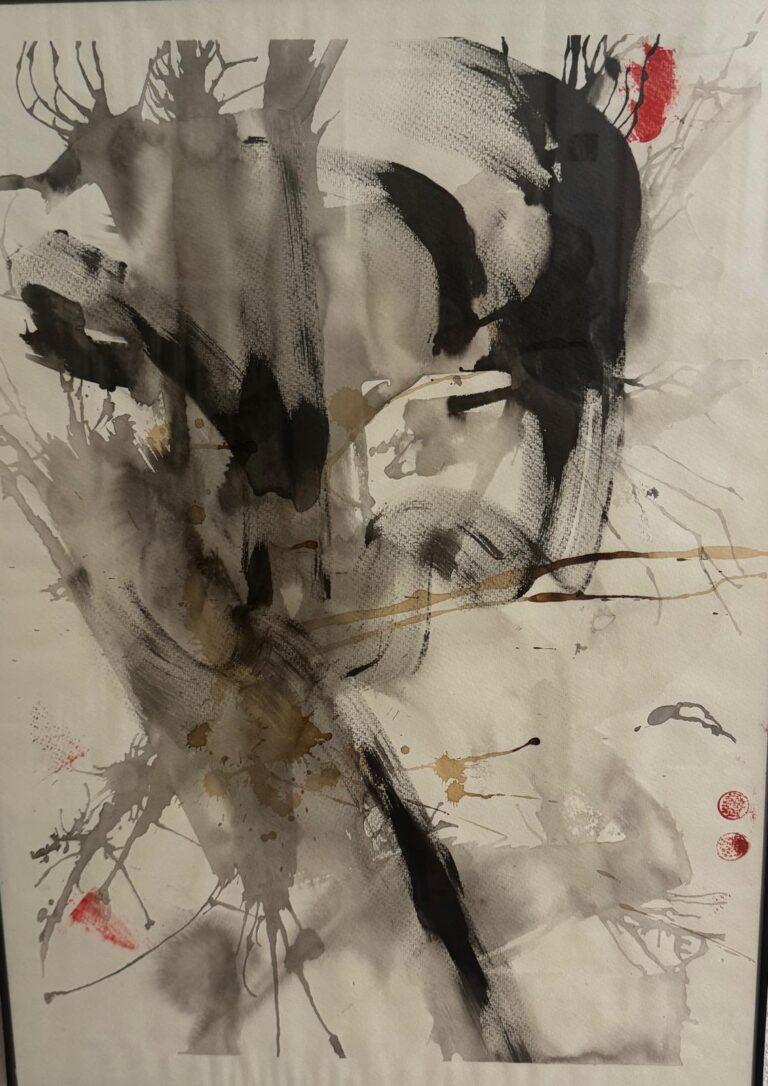
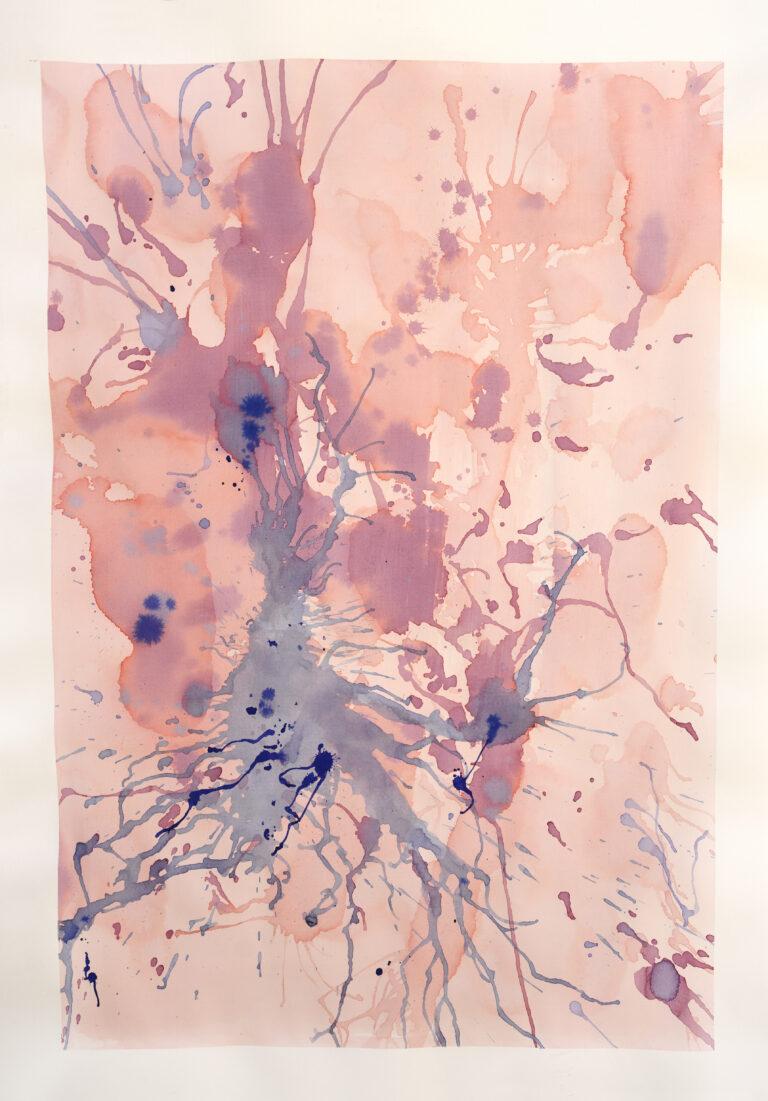
The first gesture represents nothing; it inaugurates an adventure. Acrylic, gouache, or ink do not obey docilely. Each material possesses its own inertia, speed, and resistance. Paper absorbs, canvas retains, color overflows or fades. What might be considered a setback then becomes the very occasion for painting. The obstacle ceases to be a limit: it becomes an interlocutor.
Thus the movement gradually extends from the hand to the arm, sometimes to the entire body. It is no longer only the brush, the bristle, the finger that acts; it is a balance, a breath, a physical tension that inscribes itself in the material. Lines surge forward, surfaces shift, traces remain as witnesses to a silent negotiation between will and what escapes it.
The gaze intervenes only afterward. The painting, once realized, becomes for the painter a place of observation as much as a place of memory. Roberto Induni does not seek confirmation of an intention there, but the discovery of a reality that was not yet accessible to him. Through each work, it is his own relationship to the world that shifts. Painting ceases to be an object; it becomes an instrument of knowledge.
No canvas, no ink repeats the previous one. Each invents its own balance, imposes its own rhythm, sometimes demanding a new gesture, sometimes the interruption of all gesture. For it sometimes requires more resolve to stop than to continue. The work finds its rightness in that fragile boundary where intervening further would destroy what has finally just appeared.
Over the course of the work, unexpected connections emerge. Paper acquires the suppleness of fabric; canvas seems to offer the resistance of leather; materials cease to be mere supports and become presences. They shift the gaze beyond familiar categories and open a space where habits of thought momentarily lose their authority.
When a work leaves the studio, it ceases to belong fully to the one who made it. It enters into the lives of others, where it will encounter gazes, memories, and interpretations that its author will never control. The void left by a painting already calls for the next one. Painting does not consist of producing objects, but of pursuing a search of which each work is only a temporary pause.
About Roberto Induni
Before being an image, a painting is an act. It does not proceed from a vision that one need only transcribe with more or less skill, but from a commitment in which the hand accepts not knowing what it will encounter. For Roberto Induni, the painting never confirms a previously conceived idea. It begins where all certainty consents to fade away.
The first gesture represents nothing; it inaugurates an adventure. Acrylic, gouache, or ink do not obey docilely. Each material possesses its own inertia, speed, and resistance. Paper absorbs, canvas retains, color overflows or fades. What might be considered a setback then becomes the very occasion for painting. The obstacle ceases to be a limit: it becomes an interlocutor.
Thus the movement gradually extends from the hand to the arm, sometimes to the entire body. It is no longer only the brush, the bristle, the finger that acts; it is a balance, a breath, a physical tension that inscribes itself in the material. Lines surge forward, surfaces shift, traces remain as witnesses to a silent negotiation between will and what escapes it.
The gaze intervenes only afterward. The painting, once realized, becomes for the painter a place of observation as much as a place of memory. Roberto Induni does not seek confirmation of an intention there, but the discovery of a reality that was not yet accessible to him. Through each work, it is his own relationship to the world that shifts. Painting ceases to be an object; it becomes an instrument of knowledge.
No canvas, no ink repeats the previous one. Each invents its own balance, imposes its own rhythm, sometimes demanding a new gesture, sometimes the interruption of all gesture. For it sometimes requires more resolve to stop than to continue. The work finds its rightness in that fragile boundary where intervening further would destroy what has finally just appeared.
Over the course of the work, unexpected connections emerge. Paper acquires the suppleness of fabric; canvas seems to offer the resistance of leather; materials cease to be mere supports and become presences. They shift the gaze beyond familiar categories and open a space where habits of thought momentarily lose their authority.
When a work leaves the studio, it ceases to belong fully to the one who made it. It enters into the lives of others, where it will encounter gazes, memories, and interpretations that its author will never control. The void left by a painting already calls for the next one. Painting does not consist of producing objects, but of pursuing a search of which each work is only a temporary pause.
About
Roberto
Induni
Before being an image, a painting is an act. It does not proceed from a vision that one need only transcribe with more or less skill, but from a commitment in which the hand accepts not knowing what it will encounter. For Roberto Induni, the painting never confirms a previously conceived idea. It begins where all certainty consents to fade away.
The first gesture represents nothing; it inaugurates an adventure. Acrylic, gouache, or ink do not obey docilely. Each material possesses its own inertia, speed, and resistance. Paper absorbs, canvas retains, color overflows or fades. What might be considered a setback then becomes the very occasion for painting. The obstacle ceases to be a limit: it becomes an interlocutor.
Thus the movement gradually extends from the hand to the arm, sometimes to the entire body. It is no longer only the brush, the bristle, the finger that acts; it is a balance, a breath, a physical tension that inscribes itself in the material. Lines surge forward, surfaces shift, traces remain as witnesses to a silent negotiation between will and what escapes it.
The gaze intervenes only afterward. The painting, once realized, becomes for the painter a place of observation as much as a place of memory. Roberto Induni does not seek confirmation of an intention there, but the discovery of a reality that was not yet accessible to him. Through each work, it is his own relationship to the world that shifts. Painting ceases to be an object; it becomes an instrument of knowledge.
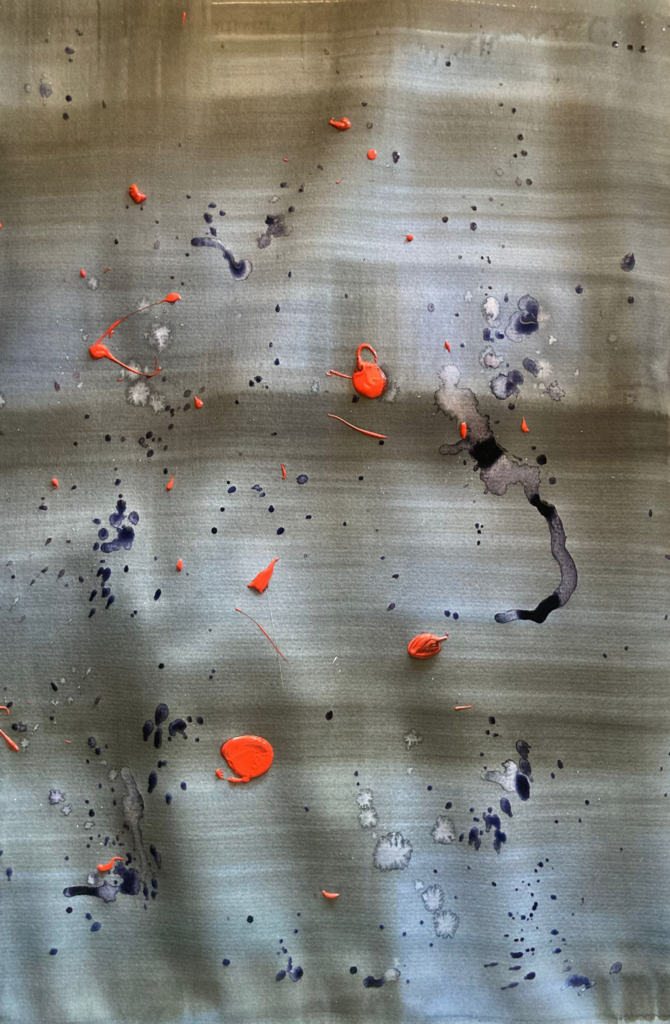
No canvas, no ink repeats the previous one. Each invents its own balance, imposes its own rhythm, sometimes demanding a new gesture, sometimes the interruption of all gesture. For it sometimes requires more resolve to stop than to continue. The work finds its rightness in that fragile boundary where intervening further would destroy what has finally just appeared.
Over the course of the work, unexpected connections emerge. Paper acquires the suppleness of fabric; canvas seems to offer the resistance of leather; materials cease to be mere supports and become presences. They shift the gaze beyond familiar categories and open a space where habits of thought momentarily lose their authority.
When a work leaves the studio, it ceases to belong fully to the one who made it. It enters into the lives of others, where it will encounter gazes, memories, and interpretations that its author will never control. The void left by a painting already calls for the next one. Painting does not consist of producing objects, but of pursuing a search of which each work is only a temporary pause.
Roberto Induni